How it works

From access to history, with security.

Configure once. L3 Backups validates every run and preserves reliable versions in history.
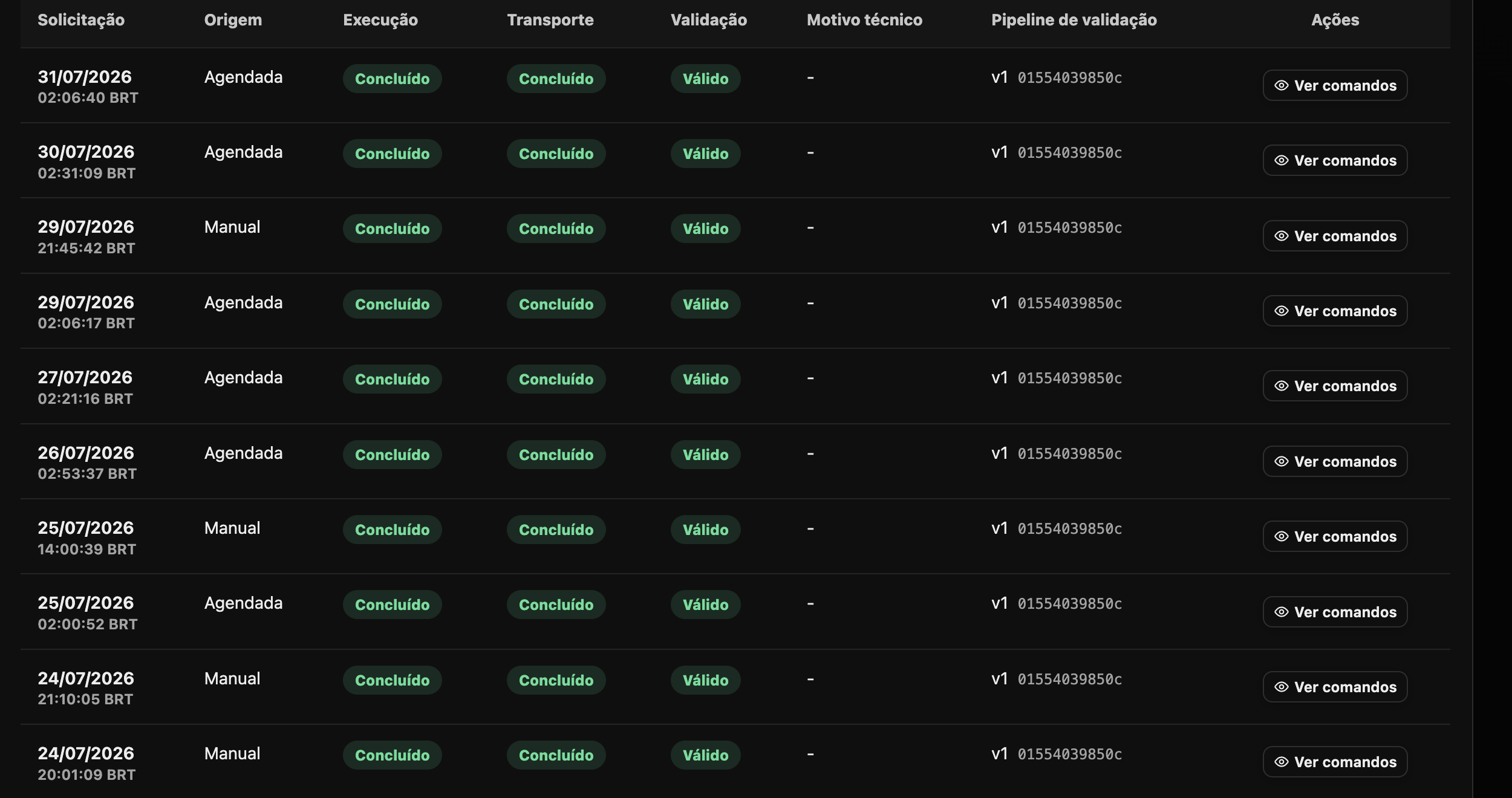
  • Automatic validation
  • Reliable history
  • Failure alerts
L3 Backups execution history showing completed runs and validation statuses.
Valid versions preserved

Operational flow

A simple process, from access to history.

Configure once. Then L3 Backups runs, validates, and organizes versions automatically.

Prepare access

Register the device and define how its configuration will be collected.

  • Register the device
  • Define the collection

Validate and automate

Validate access and schedule the runs.

  • Run an initial validation
  • Run now or schedule

Monitor and review

Review the results and access reliable versions in history.

  • Track results
  • View and compare versions

When something goes wrong

Failures stay visible. Reliable versions stay protected.

Every interruption is recorded, may trigger retries, and does not replace reliable versions in history.

Valid versions preserved

An incomplete or invalid run records the reason and does not replace reliable versions in history.

Failures do not go unnoticed

Retries, notifications, and alerts show when collection fails and when it returns to normal.

Traceable execution

Execution steps and sent commands are recorded to support analysis and auditing.

Protected retention

Rotation happens only after a new valid version is accepted, avoiding the removal of reliable versions too soon.

Terms without jargon

What each concept means here.

Configuration backup
A copy of a configuration at a point in time for inspection, comparison, and manual recovery.
Validated backup
A collection whose response passed semantic rules before being accepted as a valid version.
Dry Run
A test of the template on the real device without creating a backup or changing history.
Host Key
The SSH server cryptographic identity, validated before credentials are sent.
Backup template
A reusable set of commands and parameters that defines how the configuration is collected.
Retention
The maximum number of versions kept per device — not a duration in days.
Comparison
A view of added, removed, or changed lines between two versions.